Public Budget Hearing and Special Called Meeting
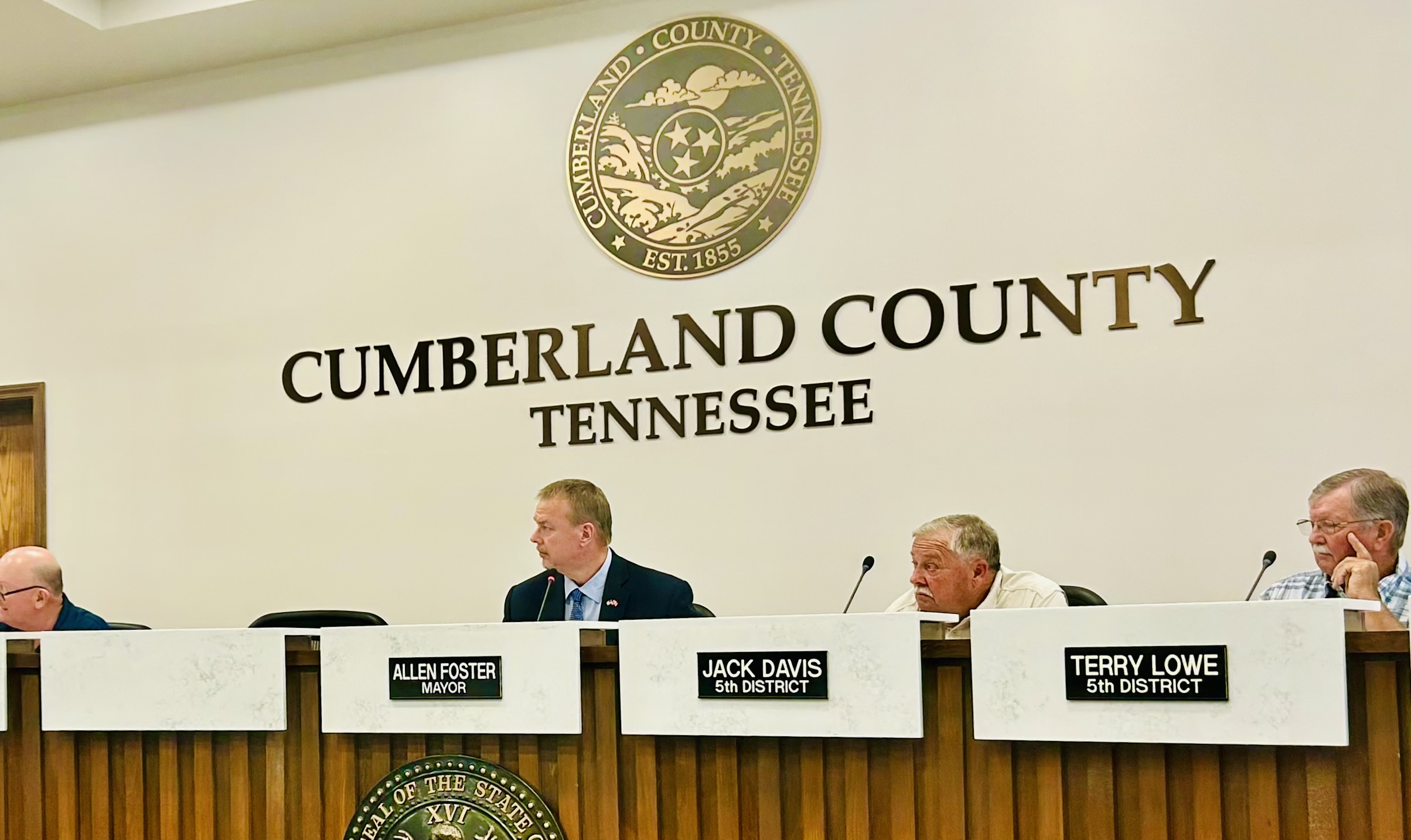
The Cumberland County Commission met for a public hearing followed by a special called meeting to approve the 2026-2027 budget. All were present except Commissioner Patterson, who is in rehabilitation recovering from eight broken ribs. The budget was adopted through four resolutions, which are detailed below.
No Tax Increase
One of the most important things for taxpayers to know is that this budget does not include a tax increase. County services are funded without asking Cumberland County taxpayers for more money.
That is good news, but it should not be taken for granted. This budget also relies on a significant use of fund balance. I have concerns about whether some of that spending can be sustained in future years. Before getting into the budget highlights, I want to explain how our funds work, where the money comes from, and why the use of fund balance matters.
How Funds and Fund Balances Work
In all budgets, the basic principle is the same. Over time, the money coming in must be enough to cover the bills that must be paid. If recurring expenses are consistently greater than recurring income, there is a problem.
Most of us have a checking account and a savings account. County government has something similar. We just use different names.
We call our “checking accounts” funds. At home, we deposit our paychecks into a checking account and use that money to pay recurring expenses such as electricity, groceries, gas, and insurance. In county government, revenue from property taxes, sales taxes, fees, grants, and other sources is deposited into different funds and used to provide services and pay expenses.
In local government, what we might compare to a “savings account” is called fund balance. Fund balance builds over time when revenues exceed expenditures or when departments spend less than the amounts budgeted to them. Some fund balance is restricted for specific purposes, while some may be available for emergencies, planned projects, and other one-time expenses.
There is nothing wrong with using available fund balance for a planned one-time expense. That is actually a good use of the money. The concern comes when we depend on fund balance to pay recurring expenses year after year. At home, we would not want to rely on withdrawals from our savings account every month to pay the electric bill or car payment. That may work temporarily, but the savings will eventually run out.
Where the Money Goes
To understand why the use of fund balance matters, it helps to know what each part of the county budget pays for and where its money comes from.
Cumberland County has five main budget areas: the General Fund, Solid Waste/Sanitation Fund, General Purpose School Fund, General Debt Service Fund, and Highway Department.
The General Fund pays for many of the county services people depend on every day. These include the Sheriff’s Department, jail, ambulance service, fire protection, Health Department, elections, courts, libraries, animal control, emergency management, veterans services, and economic and community development. It also pays for the offices and administrative functions necessary to operate county government.
Altogether, the approved General Fund budget is approximately $49.3 million. These are continuing services with expenses that must be paid year after year, which is why we must be especially careful when the fund’s recurring expenses exceed its recurring revenue.
The General Purpose School Fund pays for the regular operation of our county school system. The Solid Waste/Sanitation Fund supports our convenience centers as well as the cost of hauling waste and paying landfill tipping fees. The General Debt Service Fund is used to make payments on the county’s outstanding debt, including bonds issued for projects such as school buildings. It also provides funding for certain one-time county capital expenses. The Highway Department budget supports the department’s operations and the maintenance of county roads.
Where the Money Comes From
The vast majority of Highway Department funding comes through state aid programs and taxes on gasoline and diesel fuel. A smaller amount comes from the mineral severance tax. In recent years, the county has also provided one-time lump-sum appropriations to help fund additional paving.
The school system’s budget is supported largely by state and federal funding, along with the county’s local sales tax and a portion of the county property tax.
The remaining county funds are supported primarily by local property taxes, with smaller amounts coming from local sales taxes, grants, fees, and other revenue sources.
Concerns About Deficit Spending
Regardless of where the revenue comes from, the same basic principle applies. Recurring revenue must be sufficient to support recurring expenses. In this budget, the General Fund and the General Purpose School Fund rely on fund balance to make up the difference between revenue and expenditures.
Having a budget that includes a small, planned use of fund balance is not necessarily a bad thing. Cumberland County’s elected officials and department directors generally manage their budgets carefully and do not spend money simply because it was appropriated. They spend what they need. As a result, the county usually spends less than budgeted and finishes the year in better financial condition than the original budget projected.
The approved General Fund budget uses $1,380,473 from fund balance. That is concerning to me, but the General Fund has a healthy fund balance and remains in a strong financial position. I believe this can be managed, but it will require careful budgeting next year to make sure using fund balance for recurring expenses does not become an ongoing practice.
The General Purpose School Fund also presents a concern. Its approved budget uses $9,981,401 from fund balance. According to the Finance Department, approximately $5 million of that amount is for capital spending, meaning major one-time purchases or projects rather than annual operating expenses. Using fund balance for those one-time expenses can be appropriate because they will not automatically become part of next year’s operating costs.
That leaves nearly $5 million being used for other expenditures that are not covered by current revenue. Much of that spending will recur next year. After this planned use of fund balance, the General Purpose School Fund is projected to end the year with a fund balance of $7,233,139. Without adjustments to spending or revenue, that remaining balance could be largely depleted in a short period. This is a serious concern.
Both the General Fund and the General Purpose School Fund are using fund balance to pay expenses that are not fully supported by current revenue. The amounts and immediate risks are different, but careful budgeting will be required in both.
If deficit spending continues, it could unnecessarily put a future tax increase on the table. Good conservative fiscal principles can and should keep that from happening. Recurring expenses must be supported by recurring revenue, and fund balance should not be treated as an unlimited source of money for recurring expenses.
Fund balance can and should be used responsibly to continue reducing county debt, address deferred maintenance, fund capital projects, and meet other one-time needs. That is what the money is for. If we follow those principles, we can continue making progress, providing essential services, and protecting Cumberland County taxpayers.
Budget Highlights
Before I get into some of the highlights of the county budget outside the school system, I want to thank the members of the Budget Committee for the time and work they put into this process. I also want to thank our Finance Department, especially Finance Director Jennifer Turner and Assistant Finance Director Christian Kerley, for their work throughout the budget process. Finally, I want to thank our countywide elected officials and department heads who prepared their individual budgets and worked with us to develop the overall county budget.
The Budget Committee began its work on April 30, 2026, with an all-day budget meeting. Over the following months, the committee reviewed the individual budgets submitted by countywide elected officials and department heads, considered requests for staffing and capital purchases, and made adjustments before completing its work in July.
As mentioned earlier, this budget does not include a property tax increase. The property tax rate remains $1.1350 for every $100 of assessed value. Of that rate, $0.8064 is allocated to the General Fund, $0.1438 to the Solid Waste/Sanitation Fund, $0.0317 to the General Purpose School Fund, and $0.1531 to the General Debt Service Fund. Some adjustments were made to how the existing property tax rate is divided among the funds, but the total rate paid by taxpayers did not increase.
Sales tax revenue is projected to total $24,390,448. Approximately 75% of that revenue goes to the school system and toward paying debt associated with school facilities.
The budget includes approximately $3.3 million in capital improvements for county government. These are one-time investments in county facilities, vehicles, equipment, and technology. They include county building maintenance, vehicle and equipment additions and replacements, computer and technology upgrades, ambulance remounts, additional medical equipment, a tanker truck and equipment, heavy-duty compactors, a solid waste receiver box, and improvements at convenience center sites, including paving and fencing.
These capital investments address current needs, replace aging equipment, and help prevent additional deferred maintenance. They are also examples of how one-time funding and available fund balance can be used responsibly without adding those costs to the county’s recurring operating expenses.
County employees will receive a 2.5% cost of living adjustment. The budget also adds a full-time Veterans Service Officer and a full-time patrol officer in the Sheriff’s Department. One position in the Clerk and Master’s Office will move from pay grade 7 to pay grade 8.
The budget includes approximately $349,000 in contributions and contractual relationships with nonprofit and community organizations. This funding supports programs for adults with intellectual disabilities, senior citizens programs, the Rescue Squad, animal spay and neuter programs, and the Veterans Honor Guard. It also includes one-time funding for the Upper Cumberland State Veterans Cemetery Association, which has helped advance the development of the new state veterans cemetery, as well as the Military Memorial Museum and the Pleasant Hill Historical Society.
There were also significant increases that had to be absorbed within the budget. Health insurance costs increased by 10%, along with increases in property and casualty insurance, workers’ compensation insurance, and retirement expenses.
Overall, this budget continues funding essential county services, makes important capital investments, supports county employees, strengthens public safety and veterans services, and assists community organizations without increasing the property tax rate. At the same time, the use of fund balance in the General Fund and General Purpose School Fund makes careful budgeting in the coming year especially important.
Four resolutions were required to adopt the budget:
RESOLUTION 08-03-2026-1 – FIXING THE TAX LEVY IN CUMBERLAND COUNTY, TENNESSEE FOR THE FISCAL YEAR BEGINNING JULY 1, 2026 (LOWE) (Roll Call). This resolution was approved in a 15-1 vote, with Commissioner Threet voting against.
RESOLUTION 08-03-2026-2 – MAKING APPROPRIATIONS FOR THE VARIOUS FUNDS, DEPARTMENT, INSTITUTIONS, OFFICES AND AGENCIES OF CUMBERLAND COUNTY, TENNESSEE, FOR THE YEAR BEGINNING JULY 1, 2026 AND ENDING JUNE 30, 2027 (LOWE) (Roll Call). This resolution was approved in a 13-3 vote with Commissioners Isham, Threet, and Seiber voting against.
RESOLUTION 08-03-2026-3 – APPROPRIATIONS TO NON-PROFIT CHARITABLE ORGANIZATIONS OF CUMBERLAND COUNTY, TENNESSEE FOR THE YEAR BEGINNING JULY 1, 2026 AND ENDING JUNE 30, 2027 (LOWE) (Roll Call). This resolution was approved unanimously.
RESOLUTION 08-03-2026-4 – TO APPROVE AND ADOPT AN UPDATED PAY SCALE (LOWE) (Roll Call). This resolution was approved 16-0.
Thank you for being part of the solution and for the opportunity to serve as your County Mayor. If you are interested in hearing my thoughts and views on news, events, and activities in Cumberland County, please subscribe to my newsletter and follow me on Facebook, Instagram, and X (formerly Twitter).
Thank you.
Allen Foster
Cumberland County Mayor

